

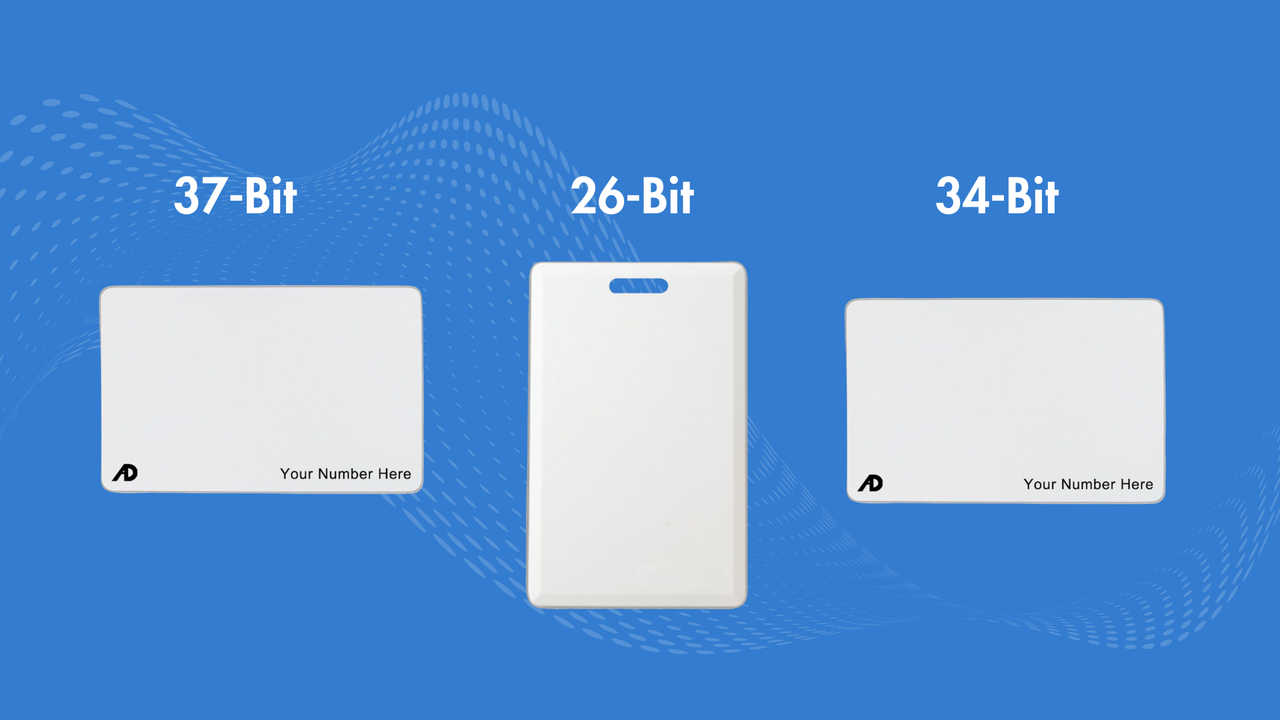
When organizations order access control cards, one of the most important details is the card format. While the physical card may look the same, the data programmed inside the card determines whether it will work with a specific access control system.
Formats such as 26-bit, 34-bit, and 37-bit are among the most commonly used structures in access control credentials. Understanding what these formats mean can help organizations avoid compatibility issues and ensure their cards function correctly.
What Is a Card Format?
A card format defines how data is structured and stored within an access control credential. This data is read by a card reader and sent to the access control system to determine whether the user should be granted access.
The format controls things like:
- The total number of bits in the credential
- How those bits are divided into sections
- Which part represents the facility or site code
- Which part represents the card number
- Error checking or parity bits
Different systems are configured to recognize specific formats, which is why ordering the correct one is critical.
What Does “Bit” Mean?
In access control credentials, a bit is a unit of digital information. Each bit represents either a 0 or a 1.
The number of bits in a card format determines how much data the card can store. More bits allow for more unique card numbers and greater flexibility in how the data is structured.
Understanding the 26-Bit Card Format
The 26-bit format is one of the oldest and most widely used formats in access control systems. It has long been considered an industry standard.
A typical 26-bit structure includes:
- 1 parity bit (beginning)
- 8 bits for the facility code
- 16 bits for the card number
- 1 parity bit (end)
This format allows for:
- Up to 256 facility codes
- Up to 65,535 card numbers
Because of its long history and compatibility with many systems, the 26-bit format is still commonly used today. However, it also has limitations in the number of unique cards it can support.
Understanding the 34-Bit Card Format
The 34-bit format expands the available data space compared to the 26-bit structure. With more bits available, organizations can support more users and more unique credentials.
While layouts can vary depending on the system, a common structure includes:
- Parity bits
- Expanded facility code
- Larger card number range
Advantages of 34-bit cards include:
- Larger number of unique credentials
- Reduced risk of duplicate card numbers
- Greater scalability for growing organizations
Because of these benefits, many modern access control systems support or prefer this format.
Understanding the 37-Bit Card Format
The 37-bit format offers even greater capacity and is often used in more secure or customized systems.
Benefits of 37-bit credentials may include:
- Significantly larger card number ranges
- Greater flexibility in assigning credentials
- Improved uniqueness across large organizations
Some manufacturers and organizations also use proprietary variations of 37-bit formats designed for enhanced security.
Why Card Format Matters
Choosing the correct card format is essential because access control systems are configured to read specific data structures. If a card’s format doesn’t match what the system expects, the reader may not recognize it.
Using the proper format helps ensure:
- Smooth credential enrollment
- Compatibility with existing readers
- Accurate access permissions
- Reliable system performance
Before ordering new credentials, organizations should always verify the format used by their current system.
Common Mistakes When Ordering Access Cards
Many organizations run into problems when replacing or expanding their access cards. Some of the most common issues include:
- Ordering the wrong card format
- Not knowing the facility code
- Mixing multiple formats within the same system
- Purchasing cards that are not compatible with existing readers
Working with a knowledgeable provider or reviewing existing card information can help prevent these issues.
How to Identify Your Card Format
If you're unsure which format your system uses, there are a few ways to find out:
- Check your access control software settings
- Review documentation from the original system installation
- Contact your security provider or system integrator
- Look at previous card order records
Identifying the correct format before ordering helps ensure the new cards work immediately once issued.
Contact us today
Card formats like 26-bit, 34-bit, and 37-bit play a critical role in how access control systems identify users and grant entry. While the differences may seem technical, choosing the correct format ensures compatibility, scalability, and smooth system operation.
As organizations grow and security needs evolve, understanding these formats can make it much easier to manage credentials and avoid costly ordering mistakes. Whether you're replacing cards or expanding your system, verifying the card format is always an important first step.