

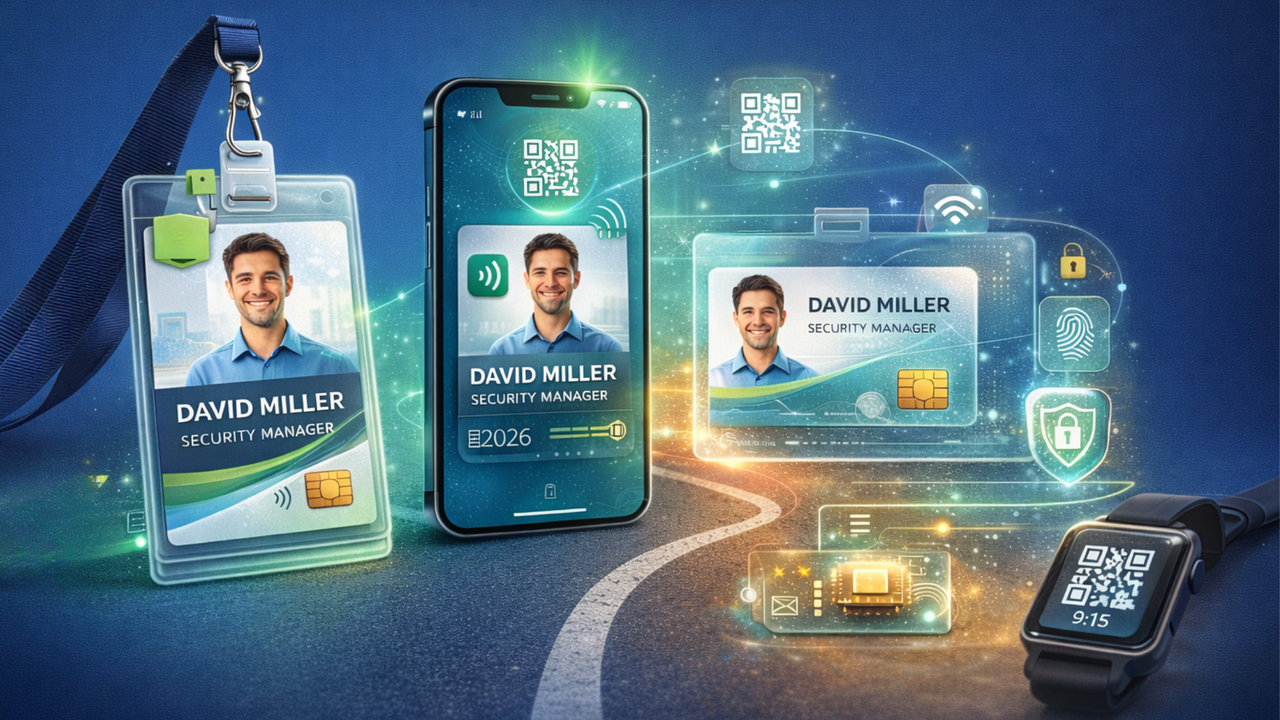
In 2026, ID cards and access badges are no longer just functional — they’re strategic assets that blend brand identity, security, usability, and technology into a single wearable solution. As organizations rethink identity solutions, design trends are evolving rapidly. From sleek minimalist layouts to smart, interactive elements and sustainable materials, badges are becoming more powerful and purposeful than ever.
Below are the key design trends shaping the future of ID cards and access badges in 2026.
1. Clean, Minimalist Aesthetics
One of the strongest trends this year is minimalism — a design philosophy that emphasizes simplicity, clarity, and function. Rather than cluttering badges with unnecessary elements, designers are prioritizing what matters most: easy readability and clear hierarchy.
Why it matters:
- Improves legibility at a glance
- Aligns with modern brand aesthetics
- Reduces visual noise, especially on small card surfaces
Minimalist designs often use generous white space, bold clean fonts, and restrained color palettes that reflect your brand without overwhelming the eye.
2. Smart Integration: NFC, QR Codes & Beyond
In 2026, badges increasingly act as digital gateways — not just static identifiers. Embedding QR codes, NFC chips, or RFID technology directly into ID cards is now a mainstream trend.
What this enables:
- Scan-to-access directories, profiles, or digital business cards
- Touchless access control across facilities
- Dynamic badge functionality tied to apps or systems
Instead of simply printing a code, organizations are integrating these smart elements seamlessly into their badge design for both aesthetic and functional value.
3. Sustainable & Eco-Friendly Materials
Sustainability continues to gain traction in badge design. From recycled plastics and biodegradable cards to plant-based inks, eco-friendly materials are no longer optional — they’re expected.
Benefits of sustainable badges:
- Supports corporate environmental goals
- Appeals to eco-conscious employees and guests
- Long-term savings through reduced waste
Organizations are selecting materials that not only look great but demonstrate environmental responsibility.
4. Enhanced Security Built Into the Design
Security isn’t just about technology — it’s a design consideration. Advanced badges in 2026 feature integrated security elements that are both functional and visually cohesive.
Examples include:
- Subtle holographic overlays
- Microtext and guilloché patterns
- Embedded RFID or encrypted NFC chips
These features enhance protection against counterfeiting while maintaining a polished appearance.
5. Brand-Driven Color Psychology
Color is emerging as a powerful tool in badge design. Beyond matching company colors, designers are applying color psychology to influence perception and usability.
How it’s used:
- Warm tones for welcoming roles (e.g., customer service)
- High-contrast palettes for accessibility and readability
- Color-coded zones to indicate access levels or departments
This trend ensures badges aren’t just branded — they communicate purpose and clarity at a glance.
6. Dual Identity: Physical + Digital Badge Twins
As hybrid work and remote access become standard, the idea of a digital badge twin is taking root. Digital counterparts can live in apps, wallets, or corporate systems, extending the value of physical badges into virtual environments.
This hybrid approach supports:
- Seamless integration with mobile credentials
- Remote authentication workflows
- Digital verification for training, achievements, or roles
Physical cards and digital IDs are increasingly designed as a unified experience rather than separate artifacts.
7. Inclusive & Accessible Design
Accessibility is a must, not a bonus. Badge designers are focusing on features that accommodate diverse needs, including:
- High-contrast text and fonts
- Larger type sizes for better readability
- Universal symbols for multilingual audiences
Inclusive badge design ensures all users — including those with visual impairments or language differences — can use them confidently and comfortably.
What This Means for Your Organization
The badge design trends of 2026 show a clear shift: ID cards and access badges are becoming strategic tools for identity, security, branding, and engagement. They’re functional without sacrificing visual appeal — and they serve both physical and digital realms.
Whether you’re updating a corporate access program, designing event credentials, or modernizing a school ID system, embracing these trends will help you build badges that are secure, smart, sustainable, and visually striking.
Let’s turn your IDs into powerful identity tools.
Reach out to our experts to explore modern designs, advanced security features, and integrated technologies that will serve your organization in 2026 and beyond.